Anmo art/cha — Shopify Store for Tea Shop & Gallery
- Client
- Anmo art/cha — tea shop & art gallery, Düsseldorf
- Role
- End to end: consulting, setup, theme, first product photos and copy, launch, handover
- Timeline
- 4 weeks
- Year
- 2019
- Stack
- Shopify (theme customization)
- Status
- Live since 2019, run by the owner herself
Context
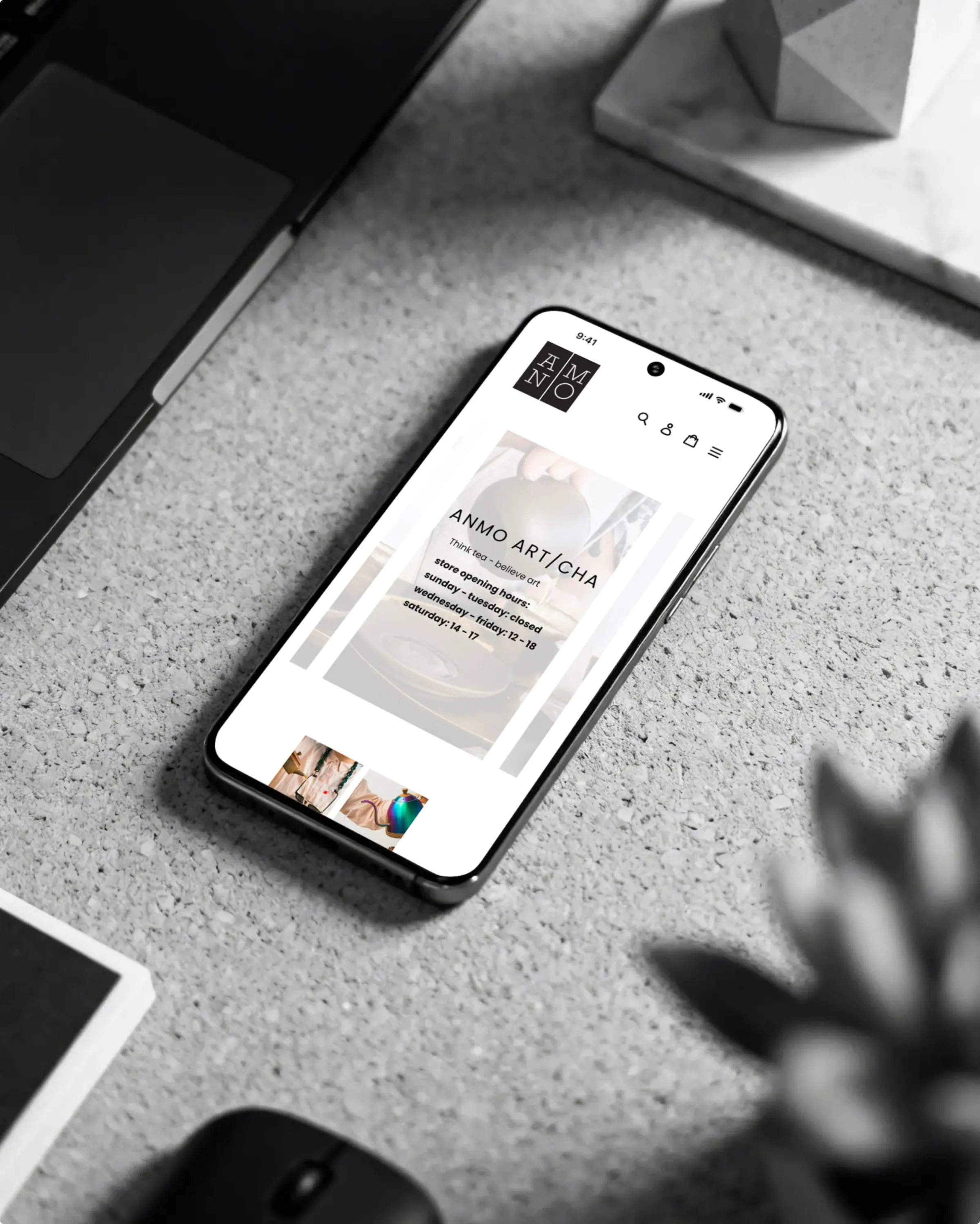
A tea shop and an art gallery under one roof, with a physical store in Düsseldorf and no in-house tech. The owner wanted to sell online without hiring someone afterward to run the software. After handover, she had to be independent, including from me. I built the store on Shopify, from consulting to handover. For the launch, I also helped set up the first product photos and copy. The shop has been live since 2019, and the owner runs it without me.
Decisions
Decision 1
Shopify Over a Custom Build
I could have built something custom, with more freedom in the layout, but also a bigger bill and a permanent dependency on me. Shopify was the trade in the other direction: less design freedom, but a platform a small business can run on its own. Orders, payments, shipping, and product upkeep run without a developer.
Trade-off: Less freedom in the layout, but no dependency on a developer. For this client, that was the only recommendation I could stand behind, even though a custom build would have been better business for me.
Decision 2
Sold Out Stays Visible
A small shop can't stock many items. Every spot in the catalog has to earn its place. During consulting, I put an option on the table: keep sold-out products visible instead of hiding them. That turns the catalog itself into a research tool. What customers linger on, and what they still ask about despite it being unavailable, feeds into what gets reordered. The owner went with it. We limited variants to package sizes, so upkeep stays simple.
Trade-off: Visible unavailability risks frustrating customers. In exchange, the shop gets a demand signal it would otherwise never have.
Decision 3
Handover Is Part of the Project, Not the End of It
The project included thorough onboarding: where orders come in and how to process them, how to change content in the theme, how to add new products. The bar: the owner doesn't call me to list a product.
Trade-off: Onboarding takes project time. But it's the difference between a shop that was handed over and one that actually gets run.
Visuals
Outcome
The shop has been live since 2019, run by the owner herself: new products, pre-orders, tea tastings, collaborations, all running without me.
Infas360
Next case studyGet in touch
Similar project? The fastest way to find out if this fits is a message.
Mail app not opening? Copy the template and send it to hello@dadario.studio.